

A nebuliser converts liquid medication into a fine mist you breathe in continuously through a mask or mouthpiece, while an inhaler delivers a measured dose of medication as a spray or powder that you inhale in one or two breaths. Both get medication into your lungs, but they suit different situations: inhalers are portable and quick for daily management, while nebulisers deliver higher doses over several minutes and are typically prescribed for more severe or complex respiratory conditions.
If you or someone you care for uses respiratory medication, understanding when each device is the right choice can make a real difference to how well treatment works. This guide breaks down the differences, explains who benefits most from each, and helps you decide which is right for your needs.
In this article
- What Is a Nebuliser and What Is an Inhaler?
- How Does Each Device Work?
- Nebuliser vs Inhaler: How Do They Compare?
- Who Should Use a Nebuliser Instead of an Inhaler?
- What Are the Advantages and Disadvantages of Each?
- Which Is Better for Children?
- How Do the Costs Compare?
- Frequently Asked Questions
What Is a Nebuliser and What Is an Inhaler?
A nebuliser is an electric or battery-powered device that turns liquid medication into a continuous fine mist. You breathe the mist in through a face mask or mouthpiece over 5 to 15 minutes. Nebulisers are commonly used at home for conditions such as COPD, bronchiectasis and cystic fibrosis, and in hospitals during acute asthma attacks.
An inhaler is a small, handheld device that delivers medication directly to your airways in a few seconds. The two main types are metered-dose inhalers (MDIs), which release a measured spray of medication, and dry powder inhalers (DPIs), which require you to breathe in sharply to draw the powder into your lungs. Inhalers are the standard first-line treatment for asthma and COPD in the UK.
How Does Each Device Work?
Nebuliser
The compressor (or ultrasonic/mesh element) forces air through liquid medication, breaking it into tiny droplets small enough to reach deep into the lungs. You simply breathe normally through the mask or mouthpiece. Treatment sessions typically last 5 to 15 minutes depending on the medication and dose.
Metered-dose inhaler (MDI)
You press the canister to release a fixed dose of medication as an aerosol spray. Timing the press with your breath is critical for getting the full dose into your lungs. Using a spacer (a tube that sits between the inhaler and your mouth) removes the need for precise coordination and significantly improves drug delivery.
Dry powder inhaler (DPI)
You load a dose and breathe in quickly and deeply. No spray is released; your breath draws the powder into your lungs. DPIs require a stronger inhalation than MDIs, which can be difficult for young children or people with very weak breathing.
Nebuliser vs Inhaler: How Do They Compare?
| Feature | Nebuliser | Inhaler (MDI/DPI) |
|---|---|---|
| How medication is delivered | Continuous mist breathed in over 5 to 15 minutes | Single measured dose inhaled in 1 to 2 breaths |
| Portability | Larger device, needs power source (mains or battery) | Pocket-sized, no power needed |
| Technique required | Minimal: breathe normally through mask/mouthpiece | MDI: coordinate press and breath (or use spacer). DPI: quick, deep inhalation |
| Dose delivered | Higher doses possible | Fixed, lower dose per actuation |
| Treatment time | 5 to 15 minutes | Seconds |
| Cleaning | Requires washing after each use and weekly disinfection | Minimal: wipe mouthpiece weekly |
| Cost | Higher upfront cost (device plus consumables) | Lower cost (prescription or OTC) |
| Best for | Severe conditions, high-dose delivery, very young/elderly patients | Daily management of asthma and COPD |
Who Should Use a Nebuliser Instead of an Inhaler?
For most people with asthma or COPD, an inhaler (often with a spacer) is all that is needed. The NHS and Asthma + Lung UK recommend inhalers as first-line treatment because they are effective, portable and quick to use.
However, a nebuliser may be more appropriate if:
- You have a condition that requires high-dose or specialist medication, such as bronchiectasis, cystic fibrosis or pulmonary fibrosis, where nebulised saline or antibiotics are part of the treatment plan.
- You cannot use an inhaler effectively due to arthritis, reduced hand strength, cognitive difficulties, or severe breathlessness that prevents the coordination or inhalation force an MDI or DPI requires.
- You are very young or very elderly and cannot master inhaler technique even with a spacer.
- You have severe asthma that does not respond adequately to standard inhaler doses, and your respiratory team has prescribed nebulised treatment at home.
- You are in hospital or emergency care, where nebulisers are used to deliver rapid, high-dose relief during acute attacks.
A nebuliser should only be used for home treatment when prescribed by a doctor or respiratory specialist. Using one without medical guidance can lead to incorrect dosing or delayed treatment of the underlying condition.

Mains-powered compressor nebuliser by Clement Clarke. Quiet operation, easy-clean filter access, and a durable build designed for daily home use.
What Are the Advantages and Disadvantages of Each?
Nebuliser advantages
- Requires no special breathing technique: just breathe normally through the mask.
- Can deliver higher doses of medication and specialist drugs (saline, antibiotics) that are not available in inhaler form.
- Suitable for patients who physically cannot operate an inhaler.
- Effective for very young children and infants via a face mask.
Nebuliser disadvantages
- Bulkier and less portable than an inhaler.
- Treatment takes 5 to 15 minutes per session.
- Requires cleaning after every use and weekly disinfection (see our nebuliser cleaning guide).
- Higher upfront cost for the device, plus ongoing costs for replacement chambers, masks and tubing.
- Needs a power source (mains electricity or charged battery).
Inhaler advantages
- Small, lightweight and fits in a pocket or bag.
- Treatment takes seconds.
- No cleaning routine beyond wiping the mouthpiece.
- Lower cost (prescription charge or over-the-counter purchase).
- Wide range of medications available in inhaler form.
Inhaler disadvantages
- Requires correct technique: many people use their inhaler incorrectly, which reduces the dose reaching the lungs.
- MDIs need coordination between pressing the canister and breathing in (a spacer solves this).
- DPIs need a forceful inhalation, which can be difficult for some patients.
- Fixed dose per puff: not suitable for conditions requiring higher or specialist doses.
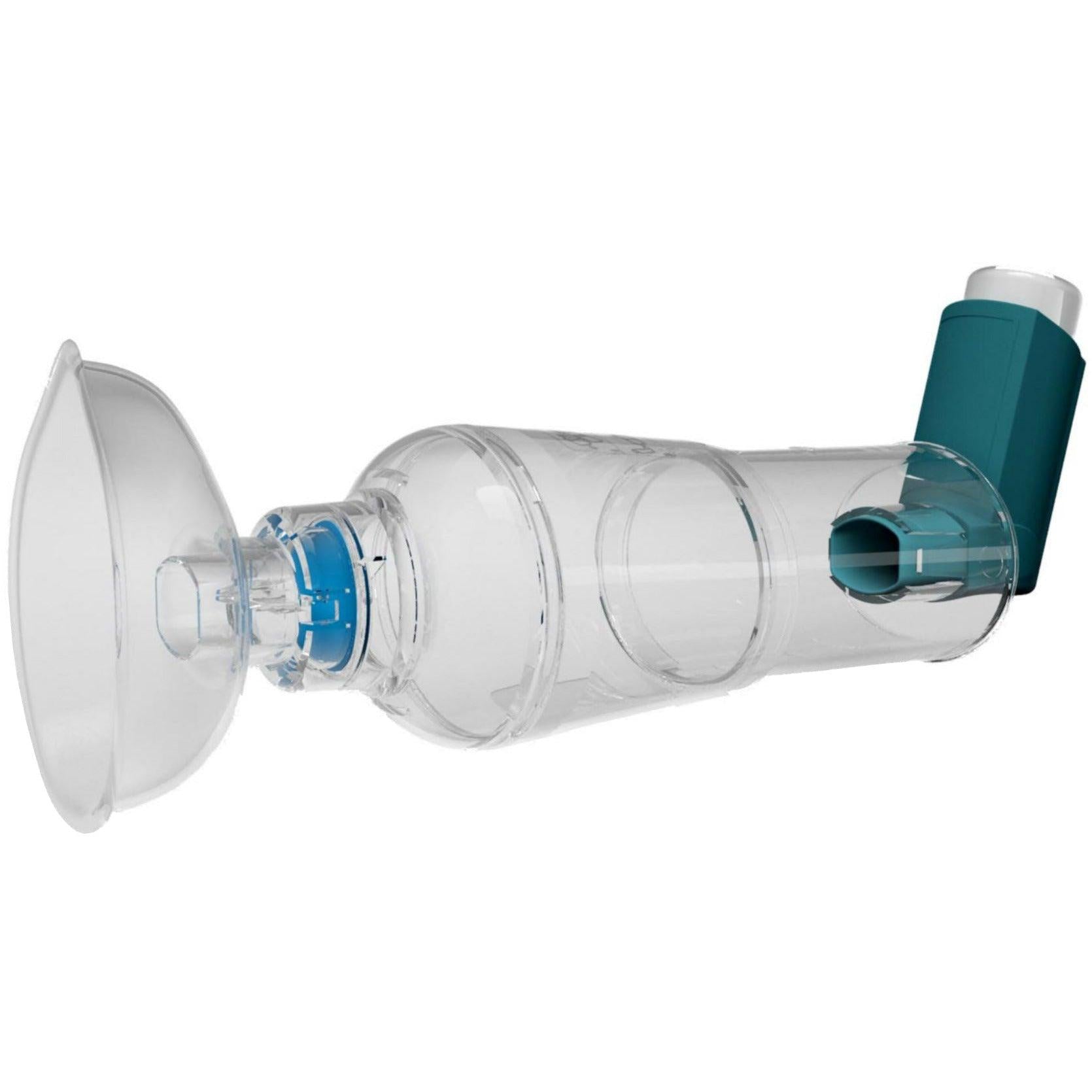
Compact, collapsible valved holding chamber by Clement Clarke. Improves inhaler technique and medication delivery. Portable enough for everyday carry.
Which Is Better for Children?
For children with asthma, the NHS recommends an MDI with a spacer as the standard treatment. A spacer removes the need to coordinate pressing and breathing, and the child simply breathes in and out through the device normally. Spacers with face masks are available for babies and toddlers.
A nebuliser is usually reserved for children who cannot use a spacer effectively, those with severe acute attacks (typically in hospital), or those with conditions like cystic fibrosis that require nebulised medications not available in inhaler form.
If your child is prescribed a spacer, choosing the right size matters. Infant and small child masks create a gentle seal around the nose and mouth, while older children can use a mouthpiece directly.
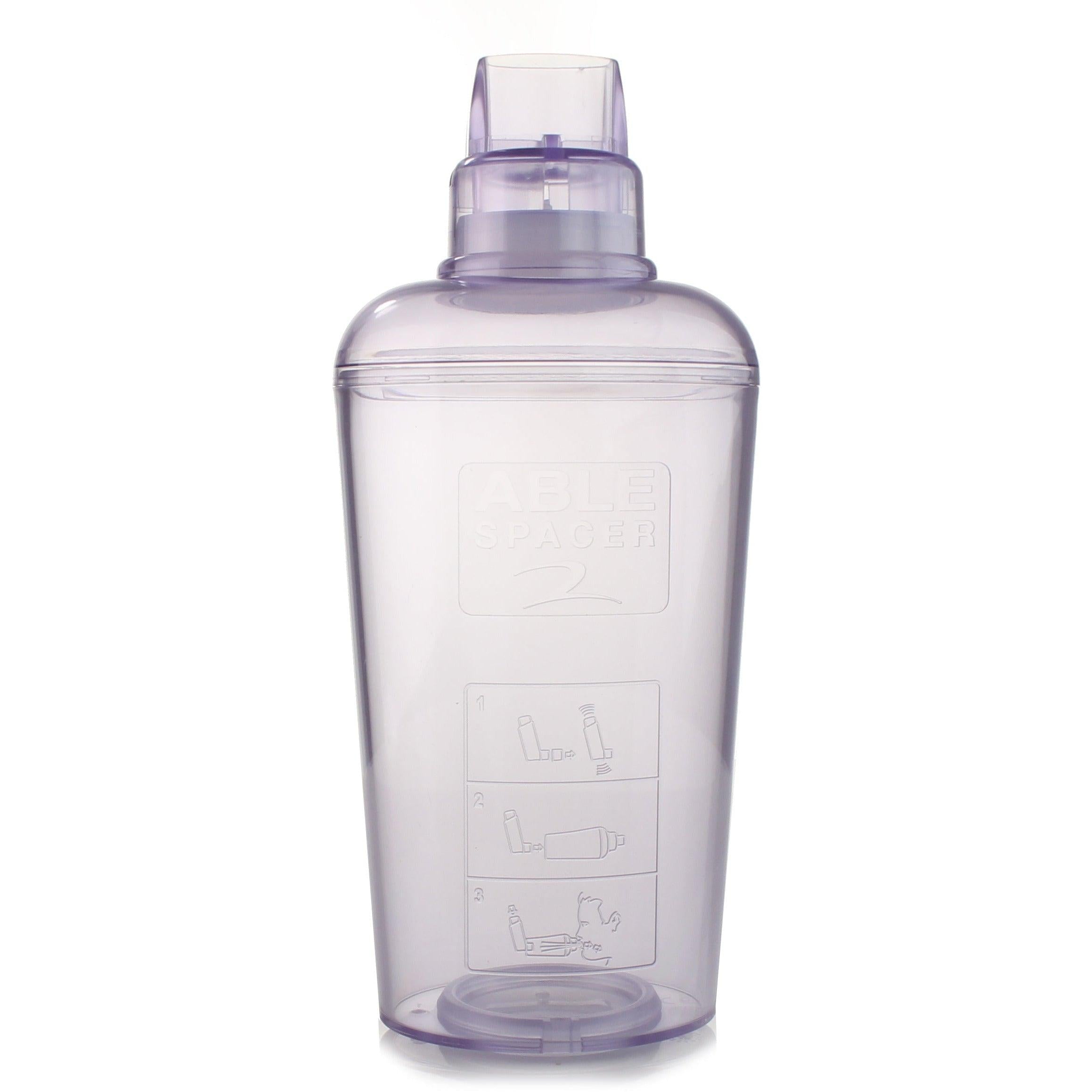
Compact 135ml valved holding chamber designed to improve inhaler technique and maximise medication delivery. Compatible with standard MDIs.
How Do the Costs Compare?
In the UK, prescription inhalers cost a standard NHS prescription charge (currently £9.90 in England; free in Scotland, Wales and Northern Ireland). Spacers are also available on prescription or can be purchased for under £10.
Nebulisers are a larger investment. A reliable home compressor costs from around £100 to £200, with replacement chambers, masks and tubing needed every 3 to 6 months at a few pounds each. If your nebuliser is prescribed by the NHS, the device itself is usually loaned to you free of charge, though you may need to purchase replacement consumables.
For most people, an inhaler with a spacer is the most cost-effective option. Nebulisers make financial sense when they are medically necessary and replace frequent hospital visits or emergency admissions.
Frequently Asked Questions
Is an inhaler a nebuliser?
No. Both deliver medicine by inhalation, but they are different devices. An inhaler (a metered-dose or dry powder inhaler) releases a measured dose that you breathe in within a few seconds, usually with a spacer for metered-dose inhalers. A nebuliser is a machine that turns liquid medicine into a fine mist, which you breathe in through a mouthpiece or mask over several minutes.
Is a nebuliser more effective than an inhaler?
For most people with asthma or COPD, an inhaler with a spacer delivers medication just as effectively as a nebuliser. Nebulisers are more effective in specific situations: when higher doses are needed, when the patient cannot use an inhaler properly, or when the medication is only available in liquid form for nebulisation.
Can I use a nebuliser without a prescription?
You can buy a nebuliser device without a prescription in the UK, but the medications used in nebulisers (such as salbutamol nebules or nebulised antibiotics) require a prescription. Using a nebuliser with just saline solution does not require a prescription, but you should consult your doctor before starting any nebulised treatment.
Can a nebuliser replace my inhaler?
Only if your doctor or respiratory specialist advises it. For most patients, inhalers remain the recommended first-line treatment. Switching to a nebuliser without medical guidance may lead to incorrect dosing or missed diagnoses.
Do I need a spacer with my inhaler?
A spacer is strongly recommended with any metered-dose inhaler. It improves the amount of medication reaching your lungs, reduces side effects in the mouth and throat, and removes the need to time your breath with the spray. Spacers are essential for children and beneficial for adults of all ages.
How long does a nebuliser treatment take?
Most nebuliser treatments take between 5 and 15 minutes, depending on the medication and dose. You should continue until the mist stops or the chamber is empty. If treatment is regularly taking longer than expected, the chamber or compressor may need replacing.
Can I take my nebuliser on a plane?
Yes, portable battery-powered nebulisers can be taken on flights. Check with your airline in advance, as some require a doctor's letter or advance notification. Mains-powered compressor units are heavier and less practical for travel; a portable mesh nebuliser is a better option for frequent travellers.
Can you use a nebuliser for a cough or chest infection?
A nebuliser can help relieve symptoms associated with a chest infection if your doctor prescribes nebulised medication such as salbutamol to open the airways, or nebulised saline to loosen mucus. However, a nebuliser does not treat the infection itself. Bacterial chest infections require antibiotics, and viral infections need to run their course. Do not self-treat a cough or chest infection with a nebuliser without speaking to your GP first.
What is the difference between a compressor nebuliser and a mesh nebuliser?
A compressor (jet) nebuliser uses a piston-driven air compressor to turn liquid medication into mist. It is reliable but tends to be larger and louder. A mesh nebuliser uses a vibrating mesh membrane with thousands of tiny holes to create the mist. Mesh nebulisers are smaller, quieter and faster, making them better suited to travel and on-the-go use. Both types are clinically effective when used with the correct medication.
Are there any side effects of using a nebuliser?
Side effects depend on the medication being nebulised, not the device itself. Common side effects of nebulised salbutamol include a slightly increased heart rate, mild tremor in the hands, and a dry or irritated throat. Nebulised steroids can cause oral thrush if the mouth is not rinsed afterwards. If you experience dizziness, chest pain, or a significant increase in heart rate during treatment, stop and contact your GP or call 111.
How often should I replace my nebuliser chamber and tubing?
Most manufacturers recommend replacing the nebuliser chamber (the cup that holds the medication) every 3 to 6 months with regular use, and the tubing every 6 to 12 months. Masks should be replaced when the seal around the face becomes loose or the material shows signs of cracking. Replacement parts are inexpensive and keeping them fresh ensures the nebuliser delivers medication efficiently. Our nebuliser cleaning guide covers maintenance in more detail.
Can I use tap water in my nebuliser instead of saline?
No. You should only use sterile normal saline (0.9% sodium chloride) or prescribed medication in your nebuliser. Tap water is not sterile and contains minerals and chlorine that can irritate the airways and potentially cause infection. Sterile saline nebules are available from pharmacies and from our nebuliser accessories range.
What is the best nebuliser for home use in the UK?
For regular home use, a mains-powered compressor nebuliser such as the Medix AC2000 is a sensible choice. It is made by Clement Clarke and designed for regular home use. If you need portability alongside home use, a mesh nebuliser offers a lighter, quieter alternative, though compressor models generally have a longer track record for durability.
For more detail on nebulisers, including types, setup and choosing the right one, read our Complete Nebuliser Guide.
Find the Right Respiratory Equipment
Browse nebulisers, spacers, replacement parts and respiratory accessories at Vena Cava.
Shop Respiratory Equipment →Free UK delivery on orders over £35.
The Vena Cava Team
Written by the clinical and product specialists at Vena Cava Ltd, a UK medical supplies company. Our team draws on hands-on healthcare experience to help you make informed choices about medical equipment for home, clinic and workplace use.


